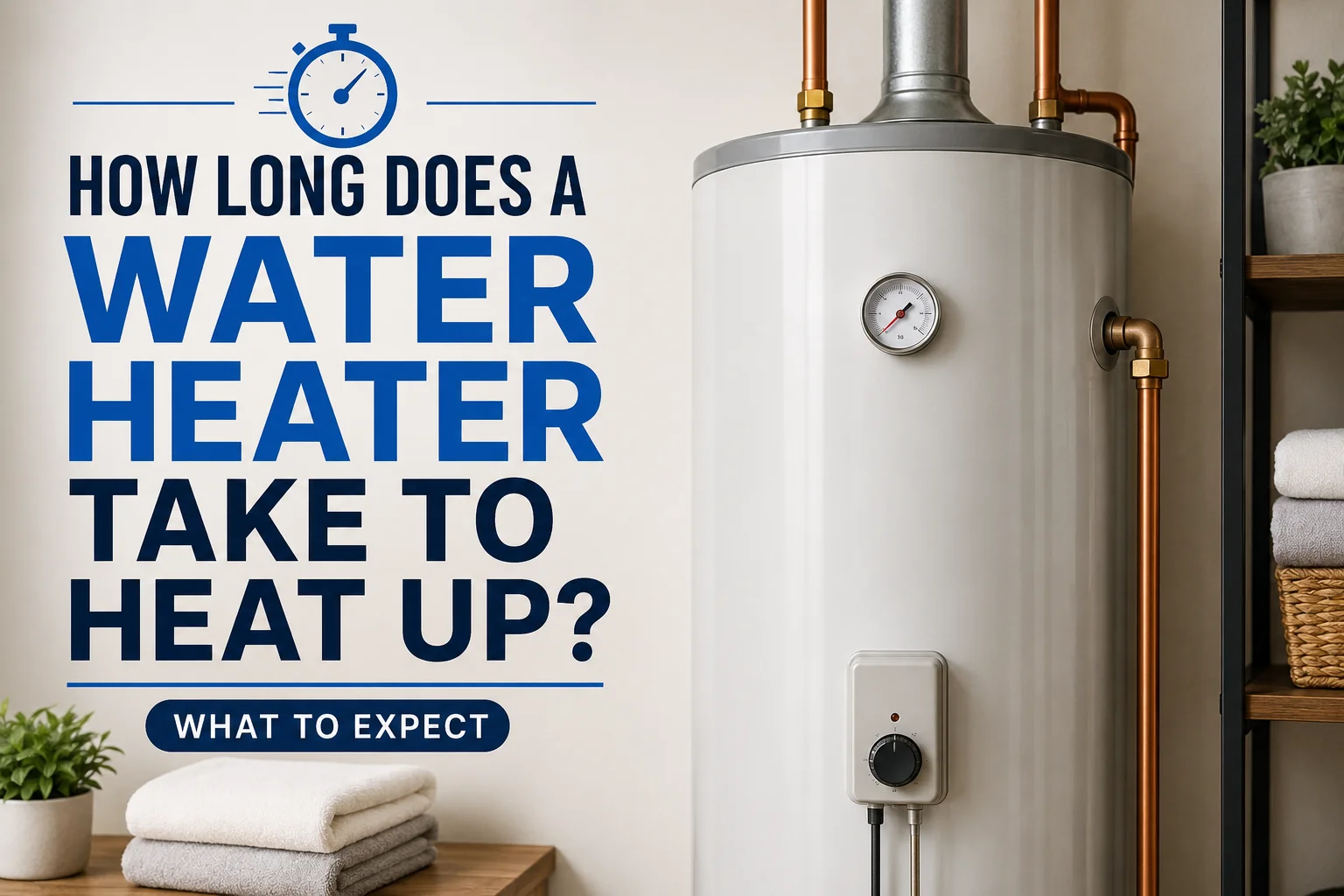
You just installed a new water heater, or maybe you’re the last one to shower after three other family members, and you’re standing there wondering: how long until the water actually gets hot again? It’s one of the most common questions homeowners ask, and the honest answer is “it depends” — but that doesn’t mean there aren’t good, practical answers. Temecula homeowners dealing with older units, undersized tanks, or a brand-new tankless system all want the same thing: a real sense of what to expect. This guide breaks down heating time by water heater type so you know what’s normal and what might be worth a second look.
How Long Does a Water Heater Take to Heat Up?
There’s no single number that applies to every water heater. Heating time depends on the type of unit, its size, its heating capacity, and how cold the incoming water is. As a general guide, a standard 40- to 50-gallon electric tank typically takes somewhere in the range of one to three hours to heat a full tank from cold, while a comparable gas tank often heats in roughly 30 to 60 minutes. Tankless water heaters work differently and usually deliver hot water within seconds of turning on the tap, since they heat water as it flows rather than storing and heating a full tank.
These ranges are starting points, not guarantees. The exact time for your specific unit depends on its size, condition, energy source, and the temperature of the water coming into your home. A water heater that’s undersized for your household, has sediment buildup, or is simply older may take noticeably longer than these general figures suggest.
How Long Does an Electric Water Heater Take to Heat Up?
Electric water heaters use one or two heating elements submerged in the tank to warm stored water. Because electric elements typically generate less heat output than a gas burner, electric tanks tend to have longer recovery times.
A few things influence how long this takes:
- Tank size – A larger tank holds more water, so it takes longer to bring the entire volume up to temperature.
- Element wattage – Higher-wattage heating elements recover faster than lower-wattage ones.
- Starting temperature – A tank that’s completely cold, such as after a new installation or extended vacancy, takes longer than a tank that’s only partially cooled.
- Simultaneous use – Running the dishwasher or washing machine while showering pulls hot water out faster than the element can replace it, extending the wait.
For a full tank starting completely cold, expect the process to take a couple of hours in many cases. A tank that’s just recovering after normal use is usually much quicker, since only part of the water needs reheating.
How Long Does a Gas Water Heater Take to Heat Up?
Gas water heaters use a burner beneath the tank to heat the water, and burners generally produce heat faster than electric elements. That’s why gas units often have shorter recovery times than similarly sized electric models.
Factors that affect gas water heater heating time include:
- Burner input (BTUs) – A higher BTU rating heats water faster.
- Tank capacity – Larger tanks still take longer than smaller ones, even with a strong burner.
- Incoming water temperature – Colder groundwater in winter months means more energy and time are needed to reach the target temperature.
It’s worth noting that gas isn’t automatically faster in every case. A high-capacity electric unit can outperform an underpowered or older gas unit. The specific model, its condition, and its rated output matter more than the fuel type alone.
How Long Does a Tankless Water Heater Take to Heat Up?
Tankless water heaters work on a completely different principle than storage-tank units. Instead of heating and holding a full tank of water, a tankless system heats water on demand as it passes through a heat exchanger. There’s no large reserve of water that needs to reach temperature before you get hot water — the unit activates when you open a hot water tap and begins heating almost immediately.
This means the “heating time” question looks different for tankless systems. Once the unit fires up, hot water is typically available within seconds. However, “heating time” and “hot water delivery time” aren’t quite the same thing. If your tankless unit is far from the fixture you’re using, you may still wait a short time for the already-heated water to travel through the pipes and push out the cooler water sitting in the line. Flow rate and the number of fixtures running at once can also affect performance with tankless systems.
What Factors Affect Water Heater Heating Time?
Several variables combine to determine how quickly any water heater recovers:
1. Water Heater Type — Gas, electric, hybrid, and tankless systems all heat water using different methods and timelines.
2. Tank Size — More stored water means more time and energy needed to heat it fully.
3. Heating Capacity — Element wattage or burner BTU output directly affects recovery speed.
4. Incoming Water Temperature — Colder source water, common in winter, requires more time and energy.
5. Desired Water Temperature — A bigger temperature increase takes longer to achieve.
6. Starting Temperature — A partially warm tank recovers faster than one that’s completely cold.
7. Hot-Water Demand — Ongoing use during recovery, like multiple showers back to back, slows the process.
8. Unit Condition — Sediment buildup, a failing element, or burner issues can all extend heating time.
How Long Does It Take to Get Hot Water After Turning On a Water Heater?
This is a slightly different question than how long the tank itself takes to heat, and the distinction matters. Even if your water heater has fully heated its stored water, hot water still has to travel through your home’s plumbing before it reaches the faucet or showerhead.
Several things affect this delivery time:
- Distance between the water heater and the fixture being used
- Pipe length and diameter
- Pipe insulation, or the lack of it
- Whether your home has a recirculation system, which keeps hot water actively moving through the lines
- The specific fixture location relative to the unit
A homeowner might assume their water heater is “slow” when the real issue is simply that hot water has a long way to travel. Understanding this difference can save an unnecessary service call — or help you describe the problem accurately if you do need one.
How Long Does a New Water Heater Take to Heat Up?
After a new installation, the tank starts out completely cold and needs to heat that full volume of water before it reaches normal operating temperature. This initial heat-up is typically the longest single heating cycle the unit will go through, since after that, the tank only needs to reheat the portion of water actually used.
Startup procedures vary by system, and gas and electric units have different requirements for safely bringing the unit online. Always follow the manufacturer’s instructions for your specific model, and if you’re unsure about pilot lighting, electrical connections, or startup sequencing, it’s best to have a qualified technician handle it rather than guessing.
Why Is My Water Heater Taking So Long to Heat Up?
If your water heater seems to be taking much longer than it used to, several issues could be responsible:
- A failed or failing electric heating element
- A malfunctioning thermostat
- Burner problems on a gas unit
- Sediment buildup coating the bottom of the tank, insulating it from the heat source
- Incorrect temperature settings
- An undersized water heater for your household’s needs
- Unusually high hot-water demand
- Colder-than-usual incoming water
- General equipment aging
- Circulation or plumbing issues elsewhere in the system
Slower heating doesn’t automatically mean the unit needs to be replaced. A proper diagnosis should always come before deciding on repair or replacement, since several of these issues are relatively straightforward fixes.
What Is Water Heater Recovery Time?
Recovery time refers to how quickly a storage water heater can reheat a batch of cold replacement water after hot water has been drawn from the tank. It’s usually measured in gallons per hour (GPH) on manufacturer specification sheets.
Recovery time depends on:
- Tank size
- Heating input (element wattage or burner BTUs)
- Incoming water temperature
- Desired output temperature
- Overall system efficiency
This is why two water heaters with the same tank size can perform very differently. A 50-gallon electric tank with a low-wattage element will recover more slowly than a 50-gallon electric tank with a higher-wattage element, even though they hold the same amount of water.
When Should You Call a Water Heater Professional?
Some signs point to a problem worth having checked out rather than something you should try to diagnose on your own:
- Water never gets fully hot, no matter how long you wait
- Heating takes noticeably longer than it used to
- Hot water runs out much faster than normal
- Water temperature fluctuates during use
- Error codes appear on a tankless or newer unit’s display
- A gas burner won’t ignite or stay lit properly
- Signs of a failed electric heating element
- Leaks around the tank or connections
- Unusual popping, rumbling, or hissing sounds
If your water heater in Temecula is consistently taking much longer than expected to heat, professional diagnosis can help determine whether the issue relates to the heating system itself, sediment buildup, improper sizing, or another component.
Water Heater Heating Time in Temecula
The same core factors apply to water heaters in Temecula as anywhere else: unit type, tank capacity, incoming water temperature, heating capacity, household demand, equipment condition, and plumbing distance all play a role. Water conditions and household setups vary from home to home, so it’s not accurate to assume every property in the area experiences identical heating performance.
What’s worth knowing is that seasonal changes in incoming water temperature can affect recovery time somewhat, and homes with larger households or multiple bathrooms tend to place more demand on a water heater’s recovery capacity. If your system seems consistently out of step with what’s typical for its type and size, a local water heater service can evaluate the unit against your household’s actual usage patterns.
Water Heater Heating Time: Quick Comparison
| Water Heater Type | What Affects Heating Time |
|---|---|
| Electric Tank | Tank size, element wattage, starting temperature |
| Gas Tank | Tank size, burner input, starting temperature |
| Tankless | Flow rate, temperature rise, unit capacity |
| Hybrid/Heat Pump | Tank size, operating mode, ambient conditions |
FAQs
How long does a water heater take to heat up?
It depends on the type and size of the unit. Electric tanks often take one to three hours from fully cold, gas tanks are typically faster, and tankless units deliver hot water within seconds since they heat on demand.
How long does an electric water heater take to heat up?
A full-size electric tank starting completely cold generally takes a couple of hours, depending on tank size and element wattage. Partial recovery after normal use is usually much quicker.
How long does a gas water heater take to heat up?
Gas tanks often recover faster than electric models because burners typically produce more heat output, but exact time still depends on tank size, burner BTU rating, and incoming water temperature.
How long does a tankless water heater take to heat up?
Tankless units don’t store and heat a full tank, so hot water is usually available within seconds of turning on the tap. Distance to the fixture can add a short delay for delivery.
How long does it take to get hot water after turning on a water heater?
This depends on both tank recovery time and how far the hot water has to travel through your plumbing to reach the fixture. A hot tank doesn’t always mean instant hot water at the faucet.
Why is my water heater taking so long to heat up?
Possible causes include a failing heating element, thermostat issues, sediment buildup, burner problems, an undersized unit, or high household demand. A professional diagnosis can pinpoint the exact cause.
How long does a new water heater take to heat up?
A newly installed unit starts completely cold, so its first heat-up cycle is typically the longest it will experience. After that, recovery times return to normal for the unit’s type and size.
What is water heater recovery time?
Recovery time is how quickly a storage water heater can reheat cold replacement water after hot water has been used, usually measured in gallons per hour.
Does a bigger water heater take longer to heat?
Generally yes, since a larger tank holds more water that needs to be heated. However, heating capacity matters too — a larger tank with a high-output burner or element can still recover efficiently.
When should I call a professional about slow water heating?
If heating time has noticeably changed, hot water runs out quickly, temperatures fluctuate, or you notice leaks or unusual sounds, it’s a good idea to have the unit professionally inspected.
Conclusion
Water heater heating time isn’t a single fixed number — it varies based on the type of system, tank size, heating capacity, incoming water temperature, and how much hot water your household is using. Electric and gas storage tanks each have their own recovery characteristics, while tankless systems heat water on demand rather than storing a full reserve. Understanding these differences helps you know what’s normal for your specific setup and when a change in performance might be worth investigating.
If your water heater in Temecula is taking much longer than expected to heat or isn’t providing reliable hot water, professional water heater service can help identify the cause and get things running the way they should.