Maybe you noticed water pooling near the base of your water heater. Maybe you’re heading out of town for two weeks and want to save energy. Or maybe a plumber is coming tomorrow and told you to shut the unit down first. Whatever the reason, “turning off a water heater” isn’t always one single action — it depends on whether your unit is gas, electric, or tankless, and on whether you actually need to stop the water supply too. This guide walks Temecula homeowners through the correct shutdown steps for each situation, along with the safety signs that mean it’s time to stop and call a professional.
What Does It Mean to Turn Off a Water Heater?
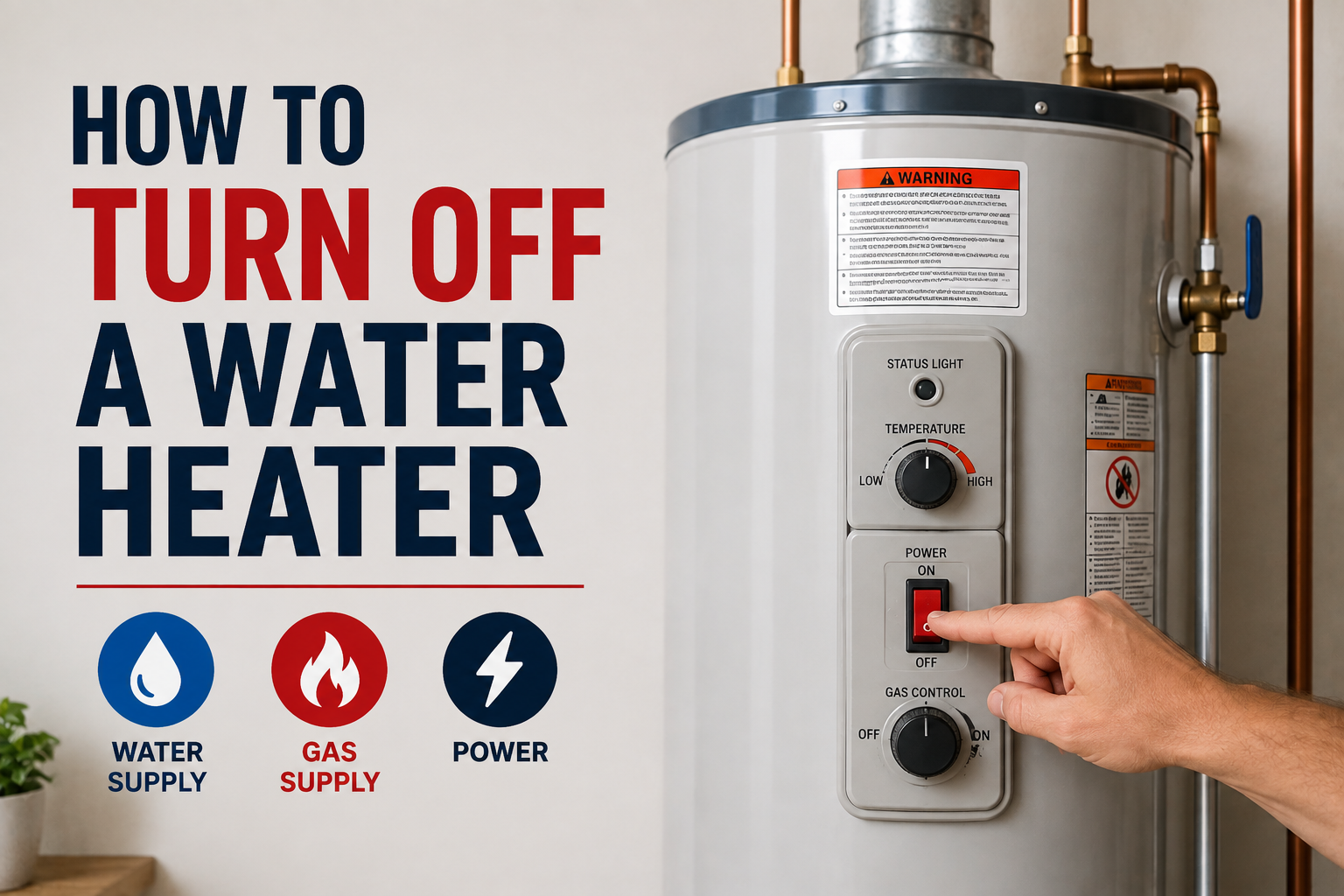
Before diving into steps, it helps to understand that “turning off a water heater” can refer to a few different actions, and they aren’t interchangeable:
- Turning off the heating system – Stopping the unit from actively heating water, without necessarily affecting water flow.
- Turning off the water supply – Closing the cold-water inlet valve so no more water enters the tank.
- Turning off the gas supply – Stopping gas flow to a gas-fired unit, separate from simply switching the control to “off.”
- Turning off electrical power – Disconnecting power from an electric water heater at the circuit breaker.
Which of these you actually need depends entirely on why you’re shutting the system down. A vacation shutdown is different from a leak response, which is different from prepping for a repair.
Before Turning Off a Water Heater
Take a moment to figure out:
- Why you’re turning it off — vacation, leak, maintenance, replacement, or an unusual noise
- What type of water heater you have — gas, electric, or tankless
- Whether there’s an active leak
- Whether there’s any gas smell or visible electrical hazard
- Whether you’re prepping for a professional repair or doing this yourself
If the water heater is leaking, keep in mind that turning off the heat source alone may not stop the leak — you may also need to close the water supply valve. Not every leak has the same cause, so don’t assume shutting off one thing solves everything.
How Do You Turn Off an Electric Water Heater?
To turn off an electric water heater, switch off the dedicated circuit breaker in your home’s electrical panel — that stops the unit from heating, though the tank will stay full and hot for a while afterward. Here’s the fuller process:
Step 1: Identify the Electrical Supply Electric storage water heaters run on their own dedicated circuit, usually a double-pole breaker labeled for the water heater.
Step 2: Turn Off the Appropriate Circuit Flip that breaker to the “off” position. This is a normal homeowner action; just don’t open the panel further or attempt any wiring work yourself.
Step 3: Confirm the Heater Is No Longer Heating Switching off the breaker stops the heating elements from running, but it doesn’t instantly cool the water already stored in the tank. Hot water will still be available for a while, gradually cooling over time.
Step 4: Shut Off the Water Supply if Necessary You don’t need to close the water inlet valve every time you switch off an electric water heater. It’s only necessary in specific cases, such as certain repairs, draining the tank, or responding to a leak.
How Do You Turn Off a Gas Water Heater?
Gas water heaters have different shutdown controls than electric units, and the exact steps vary by model. In general, you’ll be working with the gas control valve, the burner, and possibly a separate gas supply valve. Always check the instructions specific to your unit, since not every gas water heater uses the same type of control.
Turning Off the Heater Control vs. Shutting Off the Gas Supply
These are two different actions:
- Turning the gas control valve to “off” stops the burner from firing but doesn’t necessarily isolate gas from the supply line.
- Shutting off the gas supply valve, usually located on the gas line leading to the unit, fully isolates gas flow to the appliance.
For routine shutdowns — vacation, minor maintenance — turning the control valve off is often sufficient. If you suspect a gas leak or another emergency condition, the priority is safety, not a detailed step-by-step gas line procedure. Leave the area, avoid creating any spark or flame, and contact your gas utility or emergency services rather than attempting to isolate or repair anything yourself.
Never attempt to disconnect gas lines or work on gas components beyond operating the labeled control valve as intended.
How Do You Turn Off a Tankless Water Heater?
Tankless water heaters can be gas or electric, and many use electronic controls, so shutdown steps vary more by model than storage tanks do. Depending on your unit, turning it off may involve:
- Using the unit’s control panel or display to power it down
- Disconnecting electrical power if you’re preparing for service
- Closing water isolation valves when necessary, such as before maintenance
- Shutting off the gas supply on gas-powered models, following the same principles as a gas storage tank
Because tankless systems differ significantly between manufacturers, always follow your specific model’s instructions rather than assuming a universal process. Don’t attempt to open or disassemble the unit yourself.
How to Turn Off the Water Supply to a Water Heater
Turning off the water heater and turning off the water supply are not the same thing. Every storage water heater has a dedicated cold-water inlet valve, usually located on top of the unit or on the pipe feeding into it. Closing this valve stops new water from entering the tank.
You’d typically need to do this for situations like:
- A significant leak
- Certain repairs that require the tank to be isolated
- Draining the tank for maintenance
- Preparing for a water heater replacement
You generally don’t need to shut off your home’s entire main water supply just to work on the water heater — the dedicated inlet valve is usually enough, unless that specific valve isn’t functioning properly.
How to Turn Off a Water Heater When It Is Leaking
A leaking water heater often requires more than just switching off the heat source. Steps to take:
- Turn off the appropriate energy source (electric breaker or gas control) as a starting point.
- Shut off the water supply valve if the leak is significant or ongoing.
- Try to identify where the leak is coming from — a loose connection, a valve, the tank itself, the pressure relief valve area, or the bottom of the unit.
- Avoid touching electrical components near standing water.
- Don’t attempt any gas-related repairs yourself.
Not every leak can be fixed with a simple valve adjustment. A leak from the tank itself, for example, usually signals internal corrosion and often means the unit needs replacement rather than repair. If the source of the leak isn’t obvious or the leak is significant, it’s best to call a professional rather than guessing.
How to Turn Off a Water Heater Before Vacation
There’s no single “correct” vacation shutdown that applies to every household. The right approach depends on:
- How long you’ll be away
- Your water heater type
- Manufacturer recommendations for your model
- Local climate, particularly freeze risk
- Your home’s plumbing setup
Some homeowners simply lower the thermostat setting instead of fully shutting the unit down, especially for shorter trips. Others fully power down or shut off gas for extended absences. For gas units, some manufacturers offer a “vacation” mode on the control valve that’s different from a full shutoff.
Should You Turn Off the Water Heater When You Leave for Vacation?
It depends. For short trips, many homeowners leave the unit running, sometimes at a lower temperature setting. For longer absences, fully turning off the heating source can reduce energy use, but whether that’s the right call depends on your specific unit, local conditions, and how the system will be restarted when you return. There’s no universal rule that applies to every household.
What Happens After You Turn Off a Water Heater?
Once a storage water heater is switched off:
- Stored water in the tank remains hot for a period of time.
- The unit stops actively heating once it’s off.
- Hot water availability will gradually decrease as the stored water cools.
- Restarting a storage-tank system typically requires time to reheat the water.
Tankless systems behave differently since they don’t store hot water — once powered off, there’s no reserve of hot water sitting in a tank.
Does Turning Off a Water Heater Stop a Leak?
Not necessarily. Turning off electricity or gas stops the unit from heating, but it doesn’t automatically stop water from entering or leaking out of the system. If your water heater is leaking, the water supply may need to be shut off separately at the inlet valve to actually stop the leak. Cutting power or gas alone often isn’t enough on its own.
What If the Water Heater Will Not Turn Off?
If the unit doesn’t respond to normal shutdown controls, the cause depends on the type:
Electric Water Heater
- A stuck or faulty control/thermostat
- An electrical fault in the circuit
Gas Water Heater
- A stuck or malfunctioning control valve
- A burner or gas control issue
Tankless Water Heater
- A control panel or display malfunction
- An electrical fault
- A broader system fault
Don’t attempt to force or bypass a control that isn’t responding normally. If you can’t safely shut the unit down using its normal controls, that’s a sign to call a professional rather than improvising.
When Should You Call a Water Heater Professional?
Professional help is the right call when:
- The unit will not shut down using normal controls
- There’s a major water leak
- You smell gas
- Electrical wiring appears damaged
- There’s a burning smell
- The tank shows severe corrosion
- You can’t identify where a leak is coming from
- The unit has shut down repeatedly on its own
- You’re unsure which valves or controls are safe to operate
If you’re in Temecula and can’t safely determine how to shut down a malfunctioning water heater, professional water heater service can help isolate the problem without unnecessary risk.
Water Heater Shutdown in Temecula
The same fundamentals apply no matter where you live: know what type of water heater you have, follow its manufacturer instructions, know where the water and energy shutoffs are located, check for leaks before and after shutdown, and avoid DIY gas or electrical work when conditions look unsafe. For Temecula homeowners, having this information ready before an emergency happens — rather than searching for it during one — makes a real difference. If you’re ever unsure, a local water heater service can walk you through your specific unit’s shutoff points.
Gas vs. Electric Water Heater Shutdown
| Feature | Electric Water Heater | Gas Water Heater |
|---|---|---|
| Main energy source | Electricity | Natural gas or propane, depending on model |
| Heating shutdown | Electrical circuit/breaker | Gas control valve/ignition system |
| Water supply | Separate control | Separate control |
| Stored water remains hot after shutdown | Yes | Yes |
| Model-specific instructions | Yes | Yes |
| Professional help typically needed for | Electrical faults | Gas or combustion faults |
Water Heater Shutdown: What Should You Turn Off?
Depending on your situation, you may need to consider some combination of:
- The heating source (electric breaker or gas control)
- The water supply valve
- The gas supply valve
- Electrical power at the circuit
Not every situation requires all four. A short vacation might only call for a lower thermostat setting, while a serious leak calls for both the energy source and the water supply to be shut off. The right combination depends on why you’re turning the water heater off in the first place.
FAQs
How do you turn off a water heater?
For electric units, switch off the dedicated circuit breaker. For gas units, turn the gas control valve to “off.” The right approach also depends on whether you need to stop water flow too.
How do I turn off a hot water heater?
“Hot water heater” and “water heater” mean the same appliance, so the same shutdown steps apply — turn off the electrical circuit for electric units or the gas control for gas units.
How do you shut off a hot water heater?
Shutting off a hot water heater means stopping its heating source, either through the breaker for electric units or the gas control valve for gas units, following your model’s specific instructions.
How do I turn off an electric water heater?
Switch off the dedicated circuit breaker in your electrical panel. The tank will still hold hot water for a while after power is cut.
How do I turn off a gas water heater? Turn the gas control valve to its “off” setting following the label on the unit. If you need to fully isolate gas due to a leak, prioritize safety and contact your gas utility rather than working on the line yourself.
How do I turn off the water supply to a water heater?
Locate the cold-water inlet valve on top of or near the unit and close it. This stops new water from entering the tank, separate from turning off the heating source.
How do I turn off a water heater before vacation?
It depends on trip length and unit type — some homeowners lower the thermostat, others fully shut off power or gas. Check your manufacturer’s recommendations for extended shutdowns.
Should I turn off my water heater when I go on vacation?
It depends on your situation. Short trips often don’t require a full shutdown, while longer absences may call for powering down or using a vacation setting, depending on your unit and local climate.
Does turning off a water heater stop a leak?
Not necessarily. Turning off power or gas stops the heating, but water can still enter or leak from the tank unless the water supply valve is also closed.
Do I need to turn off the water supply when I turn off the water heater?
Not always. It’s typically necessary for leaks, certain repairs, draining the tank, or replacement — not for a routine shutdown like a short vacation.
How do I turn off a tankless water heater? Use the unit’s control panel to power it down, and close water isolation valves if you’re preparing for service. Steps vary by manufacturer, so check your model’s instructions.
What should I do if my water heater will not turn off? Don’t try to force or bypass the controls. If the normal shutoff isn’t working, that’s a sign of a control or electrical issue that needs professional diagnosis.
Is it safe to turn off a water heater myself? Routine shutdowns, like flipping a breaker or turning a gas control valve, are generally safe for homeowners. Avoid any DIY work involving gas lines, electrical wiring, or combustion components.
When should I call a water heater professional?
Call a professional for gas odors, major leaks, damaged wiring, burning smells, a unit that won’t shut down normally, or any situation where you’re unsure which controls are safe to operate.
Conclusion
Turning off a water heater isn’t a single universal step — it depends on whether the unit is gas, electric, or tankless, and on whether you also need to shut off the water supply. Turning off the heating source stops the unit from heating, but it doesn’t stop water flow or immediately cool the stored water, and it doesn’t stop a leak on its own. Vacation shutdowns, leak responses, and maintenance prep all call for slightly different steps, so it’s worth knowing your specific unit’s controls before you need them.
If your water heater in Temecula is leaking, will not shut down normally, or you’re unsure which valves or controls are safe to operate, professional water heater service can help identify the safest next step.