
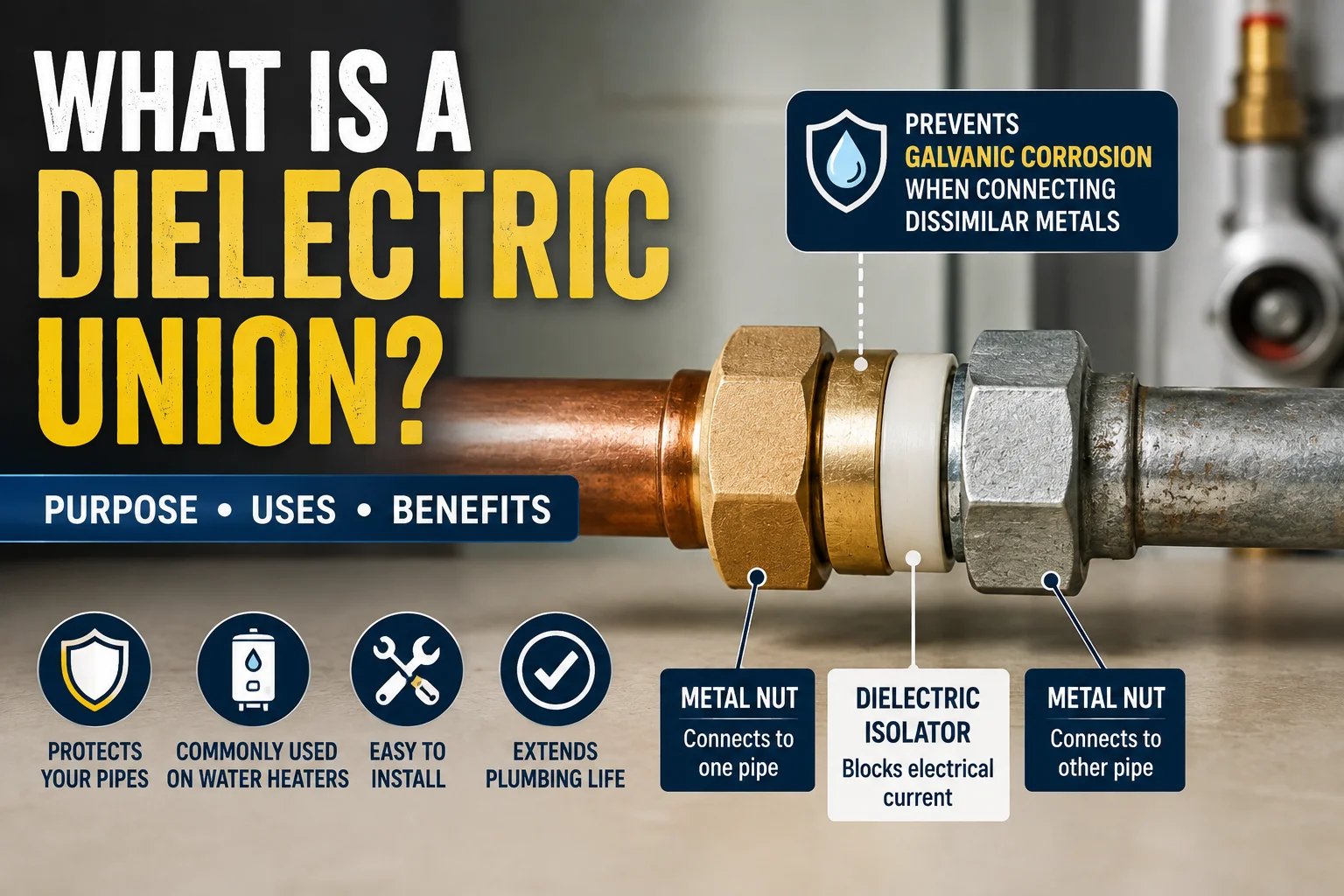
A dielectric union is a plumbing fitting used to connect two pipes made from different metals while helping reduce the risk of galvanic corrosion at that connection. This matters because when two dissimilar metals touch and water is present, a chemical reaction can slowly damage the pipe material. Dielectric unions are most often mentioned in connection with water heaters, where copper piping frequently meets steel or galvanized fittings. Understanding what a dielectric union is, and when one may be needed, can help homeowners and DIYers make better decisions about their plumbing connections and avoid premature pipe failure.
What Is a Dielectric Union?
A dielectric union is a specialized plumbing fitting made up of two halves that connect pipes of different metal types, such as copper and steel. It’s called “dielectric” because it’s designed to provide electrical isolation between the two metal components. Instead of letting the metals touch directly, the fitting includes an insulating material, often a plastic or rubber liner, along with a washer or gasket, positioned between the two halves.
This insulating layer keeps the metals from being in direct electrical contact with each other. In simple terms, it acts like a small barrier that interrupts the electrical pathway that can otherwise form between two different metals joined by water. That barrier is the whole point of the fitting, and it’s what separates a dielectric union from an ordinary plumbing union.
How Does a Dielectric Union Work?
The basic idea behind a dielectric union comes down to a few simple principles:
- Different metals have different electrochemical properties, meaning they react differently in the presence of moisture and minerals.
- Water, especially tap water with dissolved minerals, can act as a conductive path between two metals.
- When two dissimilar metals are connected and that conductive path exists, it can contribute to galvanic corrosion at the connection point.
- A dielectric union includes an insulating component, typically a plastic liner and a washer, placed between the metal parts.
- This insulation helps reduce the electrical interaction between the two metals, which can help slow down the corrosion process at that specific joint.
It’s important to understand that a dielectric union doesn’t eliminate every possible form of corrosion in a plumbing system. It’s designed to reduce one specific type of corrosion risk, galvanic corrosion, at the point where two different metals meet.
Why Are Dielectric Unions Used in Plumbing?
Plumbers use dielectric unions mainly to connect pipes made of different metals without creating a direct metal-to-metal contact point. This is useful because:
- It helps reduce the risk of galvanic corrosion at the connection.
- It can help protect the threaded or soldered joint from premature deterioration.
- It may help extend the useful life of the connection compared to a direct metal-to-metal joint.
- It’s commonly used where copper pipe connects to a steel or galvanized water heater fitting.
Whether a dielectric union is the right choice, or required, depends on the specific metals involved and the plumbing code or manufacturer instructions that apply to that installation. Not every dissimilar-metal connection automatically calls for the same fitting.
What Is Galvanic Corrosion?
Galvanic corrosion happens when two different metals are electrically connected in the presence of an electrolyte, such as water containing dissolved minerals. Each metal has a different tendency to lose electrons, and when they’re connected, one metal can corrode faster than it would on its own, while the other is left relatively protected.
In a plumbing system, this can happen at any point where two dissimilar metals are joined, such as where copper pipe meets a steel fitting. Water flowing through the connection acts as the electrolyte, allowing an electrical exchange between the metals. Over time, this process can weaken the more reactive metal at that joint. You can read more about the science behind this process on the Wikipedia page for galvanic corrosion.
Plumbing connections can be particularly vulnerable to this issue because they routinely involve standing or flowing water, mineral content, and, in many older homes, a mix of pipe materials installed at different times.
Where Are Dielectric Unions Commonly Used?
Water Heaters
Dielectric unions are commonly associated with water heater installations. Many water heaters have steel tank fittings, while the household plumbing running to and from the unit is often copper. When these two metals need to be joined, a dielectric union is a common solution. That said, not every water heater installation uses the exact same configuration. Some units, tank designs, and local code requirements differ, so it’s worth checking manufacturer instructions for the specific water heater involved.
Copper-to-Steel Connections
Connecting copper piping directly to steel or galvanized piping is one of the more common scenarios where corrosion concerns come up. Copper and steel have different electrochemical properties, so a direct joint between them can be more susceptible to galvanic corrosion than a joint between two pipes of the same material.
Other Dissimilar-Metal Plumbing Connections
Beyond water heaters, dielectric fittings may be considered any time dissimilar metals need to be joined in a plumbing system, such as certain repair situations where an older galvanized line is being connected to newer copper piping. The specific fitting needed can vary depending on pipe sizes, materials, and local plumbing requirements, so this isn’t a one-size-fits-all situation.
Dielectric Union vs Regular Union
Both dielectric unions and regular unions allow two sections of pipe to be joined together and later disconnected without cutting the pipe. However, they are not interchangeable, and using the wrong one in the wrong situation can lead to problems.
| Feature | Dielectric Union | Regular Union |
|---|---|---|
| Main purpose | Connect and isolate dissimilar metals | Connect pipes for easier separation |
| Electrical isolation | Designed to provide isolation | Not necessarily designed for isolation |
| Corrosion protection | Helps reduce galvanic corrosion risk | Does not provide the same dielectric isolation |
| Common application | Dissimilar-metal plumbing connections | General plumbing connections |
| Water heater use | Commonly discussed | Depends on application |
A regular union works well for joining pipes of the same material, but it isn’t designed to address the electrical isolation issue that comes up when two different metals are joined.
What Does a Dielectric Union Look Like?
A dielectric union generally has a similar overall shape to a standard union fitting: two threaded or soldered end pieces joined by a union nut in the middle. What sets it apart are the internal components. Inside the fitting, you’ll typically find a plastic or rubber insulating liner along with a washer or gasket positioned between the two metal halves, keeping them from touching directly.
On the outside, the two ends may look slightly different from each other since one side is often designed for copper (soldered or threaded) and the other for steel or galvanized pipe (threaded). Appearance can vary by manufacturer, pipe size, and connection type, so it’s a good idea to check the specific product markings or documentation if you’re trying to confirm whether a fitting is truly dielectric.
How to Install a Dielectric Union
Installing a dielectric union is a job many experienced DIYers can handle, though it’s still a good idea to follow manufacturer instructions closely. General steps include:
- Shut off the water supply to the relevant section of piping.
- Drain or depressurize the line as needed before disconnecting anything.
- Confirm the fitting matches the pipe materials and sizes involved.
- Identify which side of the union connects to which pipe material.
- Install each half of the fitting according to the manufacturer’s instructions.
- Make sure the insulating liner and washer are correctly positioned between the metal halves.
- Tighten the union nut securely, without overtightening.
- Restore the water supply.
- Check the connection carefully for leaks once water is running again.
If the installation involves a water heater’s gas, electrical, or combustion components, this work should be left to a qualified professional. Altering those systems without proper training can create serious safety hazards. Also avoid guessing at torque specifications; if the manufacturer provides a specific tightening guideline, follow it rather than tightening by feel alone.
Can a Dielectric Union Leak?
Yes, a dielectric union can leak. Common causes include:
- Improper assembly during installation
- A damaged or worn gasket or washer
- Corrosion or physical damage to the fitting itself
- A loose connection
- Damaged threads or sealing surfaces
- Using a fitting that isn’t compatible with the specific installation
It’s also worth noting that not every leak found near a dielectric union actually originates from the union itself. Nearby pipe joints, solder connections, or the water heater tank can sometimes be the real source, so it’s worth inspecting the full connection area before assuming the union is at fault.
Signs of a Problem With a Dielectric Union
Watch for these warning signs that a dielectric union may need attention:
- Visible water pooling or dripping around the fitting
- White or greenish mineral deposits near the connection
- Rust or visible corrosion on the fitting
- Cracked, worn, or missing insulating components
- Persistent dripping even after tightening
- Staining on nearby surfaces or pipe insulation
- A connection that feels loose when checked
- A deteriorated or brittle gasket
Keep in mind that corrosion elsewhere in a plumbing system can have several causes beyond the union itself, including water chemistry, pipe age, or unrelated joint issues.
Do You Need a Dielectric Union on a Water Heater?
Dielectric unions are commonly used on water heater installations because many tanks have steel fittings that connect to copper household plumbing. This combination is a classic example of the dissimilar-metal situation these fittings are designed to address.
That said, whether your specific water heater needs a dielectric union depends on the exact materials being connected, the water heater manufacturer’s installation instructions, and the plumbing code that applies in your area. Some manufacturers specify particular fittings or heat-trap nipples as alternatives. Homeowners shouldn’t assume that every water heater installation uses the exact same fitting; checking the installation manual for your specific unit and confirming with local code requirements is the safest approach.
Are Dielectric Unions Required?
There’s no single blanket answer here. Whether a dielectric union is required can depend on:
- The local plumbing code adopted in your area
- The specific metals being connected
- The water heater manufacturer’s installation requirements
- The jurisdiction’s amendments to model plumbing codes
- Site-specific conditions determined by a plumbing inspector
Some jurisdictions and manufacturers do call for dielectric fittings or approved alternatives at certain dissimilar-metal connections, while other situations may not require them. Because requirements vary, it’s best to consult your local plumbing code, a licensed plumber, or the manufacturer’s documentation for your specific installation rather than assuming a universal rule applies.
Common Mistakes When Using a Dielectric Union
Avoid these common errors:
- Using a fitting that’s the wrong size for the pipe
- Improperly connecting incompatible pipe materials
- Installing the insulating washer incorrectly or upside down
- Losing or damaging the insulating components during installation
- Overtightening the union nut, which can crack or deform parts
- Assuming any ordinary union provides dielectric isolation
- Skipping the manufacturer’s installation instructions
- Failing to check thoroughly for leaks after the job is done
How Long Does a Dielectric Union Last?
There’s no single guaranteed lifespan for a dielectric union. How long one lasts depends on several factors, including:
- Local water chemistry and mineral content
- Quality of the original installation
- The specific pipe materials involved
- Overall exposure to corrosive conditions
- The quality of the fitting itself
- Operating temperature and pressure conditions
- Whether the connection receives any periodic maintenance or inspection
Rather than relying on an estimated number of years, it’s more useful to watch for practical indicators like visible corrosion, leaking, or damaged insulating components. These signs are a better guide for when inspection or replacement may be needed than any fixed timeline.
When Should You Call a Plumber?
Consider calling a licensed plumber if:
- The dielectric union is actively leaking
- The fitting shows severe corrosion or physical damage
- The connection won’t loosen safely with normal tools
- Pipe replacement, not just the fitting, appears necessary
- The water heater connection needs modification
- You can’t confidently identify the pipe materials involved
- You suspect a plumbing code compliance issue
- Water is leaking near electrical components or wiring
- The repair requires opening walls or accessing concealed piping
Professional evaluation can help confirm the actual cause of a leak or corrosion issue and ensure the repair meets applicable code requirements.
Frequently Asked Questions
What is a dielectric union?
A dielectric union is a plumbing fitting designed to connect two pipes made of different metals while electrically isolating them from each other. It includes an insulating liner and washer that keep the metal halves from touching directly, which can help reduce galvanic corrosion at that connection.
What does a dielectric union do?
It joins dissimilar metal pipes, such as copper and steel, while providing electrical isolation between them. This isolation helps reduce the electrical interaction between the two metals that can contribute to galvanic corrosion at the joint.
Why are dielectric unions used on water heaters?
Many water heaters have steel tank fittings that connect to copper household plumbing. Since this creates a dissimilar-metal connection, a dielectric union is often used to help reduce corrosion risk at that specific joint, though exact requirements vary by manufacturer and local code.
What is the difference between a dielectric union and a regular union? A regular union simply allows two pipe sections to be connected and separated later. A dielectric union does the same thing but adds an insulating component designed to electrically isolate dissimilar metals, which a regular union does not provide.
Can a dielectric union prevent galvanic corrosion?
A dielectric union is designed to help reduce the risk of galvanic corrosion at the specific connection point by limiting electrical interaction between dissimilar metals. It doesn’t eliminate every possible corrosion risk in a plumbing system, and proper installation matters.
Can a dielectric union leak?
Yes. Leaks can result from improper installation, a damaged gasket or washer, corrosion, a loose connection, or damaged threads. Not every leak near the fitting originates from the union itself, so the surrounding connections should also be inspected.
Are dielectric unions required on water heaters?
It depends on the water heater manufacturer’s instructions and local plumbing code. Some installations call for dielectric fittings or approved alternatives, while others may not. Checking your specific water heater’s manual and local code is the safest approach.
What metals can be connected with a dielectric union?
Dielectric unions are most commonly used to connect copper piping to steel or galvanized piping. The specific fitting needed depends on the exact metals, pipe sizes, and application involved.
How do I know if my dielectric union is bad?
Look for visible water, mineral deposits, rust, corrosion, a loose connection, or damaged insulating components. Persistent dripping or staining near the fitting are also common signs that it may need inspection or replacement.
Can I install a dielectric union myself?
Many homeowners with plumbing experience can install a dielectric union by following manufacturer instructions. However, work involving a water heater’s gas, electrical, or combustion components should be left to a licensed professional for safety.
Conclusion
A dielectric union is a plumbing fitting designed to connect certain dissimilar metal pipes, such as copper and steel, while providing electrical isolation between them. This isolation can help reduce the risk of galvanic corrosion at that specific connection. Dielectric unions are commonly associated with water heater installations and other plumbing connections involving different metals, but they are not the same as ordinary unions. Whether one is needed, and exactly how it should be installed, depends on the materials involved, the manufacturer’s instructions, and local plumbing code requirements. If a dielectric union is leaking or severely corroded, having it inspected by a licensed plumber is the safest next step.