
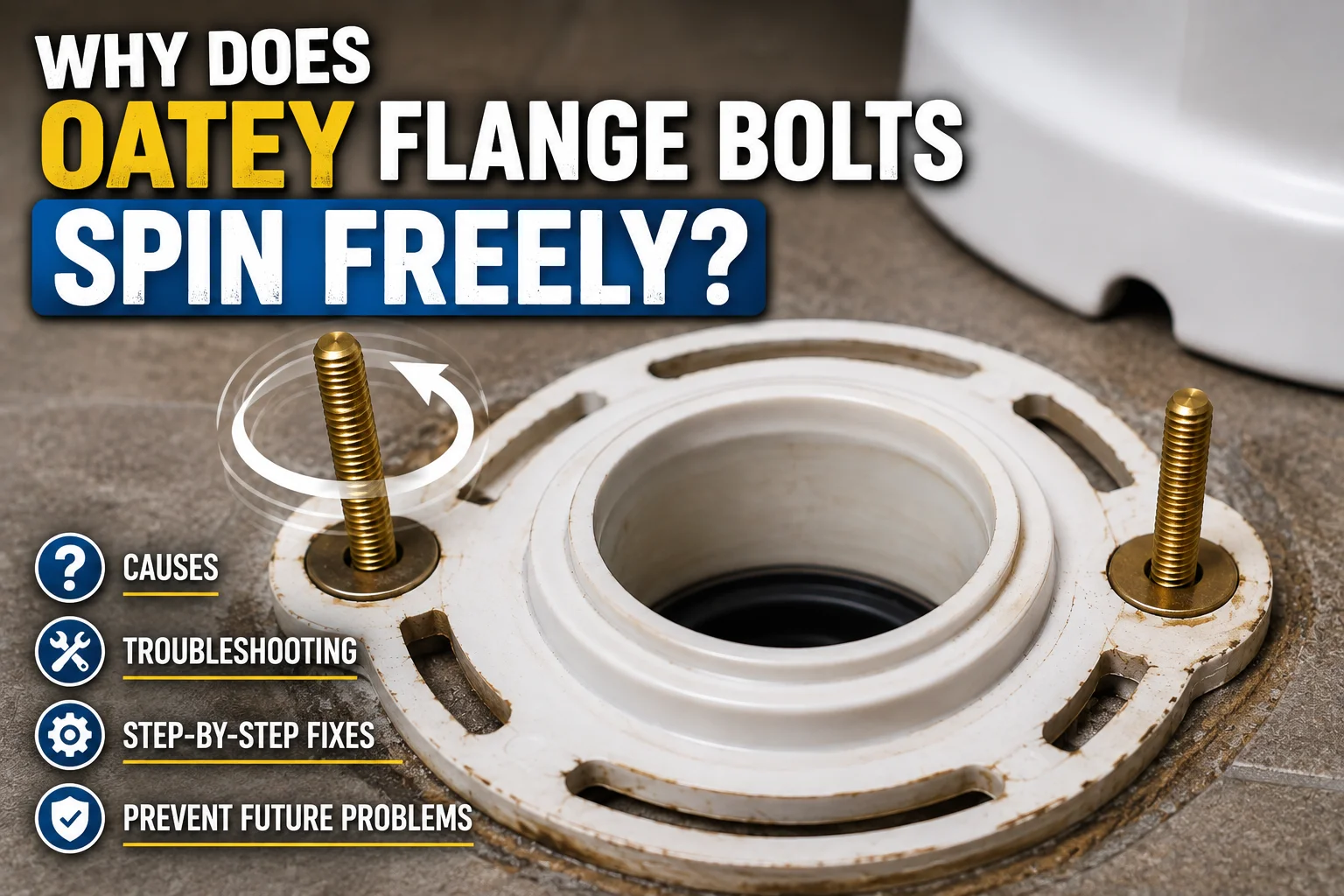
An Oatey flange bolt spins freely when the bolt isn’t properly captured by the flange, the retaining slot or hardware is damaged, the wrong bolt is being used, or the flange itself is cracked, worn, or improperly positioned. Simply cranking the nut harder almost never fixes this — a spinning bolt means the nut has nothing to pull against, so more force just spins the bolt faster instead of tightening anything.
Before attempting a repair, it helps to figure out why the bolt is spinning. The exact cause depends on your specific flange design, the bolt hardware, and how the toilet was originally installed — not every spinning bolt has the same root cause. This guide walks through the common causes, how to check which one applies to your toilet, and how to fix it safely.
Why Does an Oatey Flange Bolt Spin Freely?
A closet bolt (also called a toilet flange bolt) is designed to sit in a slot on the flange so that turning the nut above the floor pulls the toilet down snug — without the bolt itself rotating. When a bolt spins freely instead, one of several things is usually going on:
- The bolt isn’t seated correctly in the flange slot
- The retaining portion of the flange is cracked or broken
- The wrong bolt or washer is being used for that flange
- The bolt was inserted or rotated into the wrong position
- The flange itself is cracked, warped, or broken
- The flange material has corroded or deteriorated over time
- The flange isn’t properly secured to the subfloor
- The bolt is spinning together with a loose retaining washer
- Previous overtightening damaged the flange or bolt
- The bolt/washer assembly is simply worn out or defective
Not every spinning bolt has the same cause — a brand-new install with a spinning bolt often points to positioning or hardware, while a bolt that used to tighten fine and now spins usually points to flange wear or damage.
How Are Toilet Flange Bolts Supposed to Work?
In a typical setup, the head of the closet bolt slides into a slot on the flange and is turned (often about a quarter turn) so the wide part of the bolt head sits crosswise under the slot, similar to how a carriage bolt locks against rotation. That crosswise position is what keeps the bolt from spinning when the nut is tightened from above.
If the bolt head never locks into that crosswise position — because the slot is the wrong width, the bolt wasn’t rotated into place, or the flange material is damaged — the bolt has nothing to brace against, and turning the nut just spins the whole bolt in place. This basic principle applies across most flange designs, though the exact slot shape and retention method can vary by product, so it’s worth checking the installation instructions for your specific Oatey flange rather than assuming every model works identically.
Why Won’t My Toilet Flange Bolt Tighten?
There’s a difference between a bolt that resists as it tightens and one that spins endlessly:
- Normal tightening: The nut turns with some resistance and gradually pulls the toilet down.
- Reaches a stopping point: The nut becomes snug and stops turning easily — this is what you want.
- Spins endlessly: The nut (or the bolt itself) rotates with no resistance and never gets tighter.
- Bolt pulls upward instead of tightening: The bolt lifts out of the slot rather than staying anchored.
Continuous spinning almost always means the bolt isn’t being held in place at the flange. If the bolt can’t stay stationary, the nut has nothing to clamp against, so no amount of turning creates real clamping force.
Common Reasons an Oatey Flange Bolt Spins
The Bolt Isn’t Properly Seated
The bolt head needs to sit fully in the flange’s mounting slot and rotate into its locking position. If it’s angled, partially inserted, or never turned into place, it can rotate freely instead of locking.
The Wrong Bolt Was Used
Flange hardware isn’t universally interchangeable — head shape, length, diameter, and washer style all need to match the flange. A bolt with the wrong head shape may never engage the slot properly. When in doubt, use hardware recommended for your specific flange rather than a generic kit.
The Flange Slot or Retaining Area Is Damaged
Cracks, chipped plastic, or broken metal around the slot can prevent the bolt head from locking in place, even if the bolt itself is fine.
The Flange Has Deteriorated
Depending on material, corrosion (metal) or brittleness (plastic) can weaken the retaining slot over time, even if it worked fine when first installed.
The Bolt Was Overtightened in the Past
Excessive force can crack the flange, strip bolt threads, or deform the washer — any of which can leave the bolt unable to hold its position later.
The Flange Is Loose or Improperly Installed
If the flange isn’t securely fastened to the subfloor, the whole assembly can shift when tightening, making it feel like the bolt is spinning even when the slot itself is fine.
How to Check Why Your Oatey Flange Bolt Is Spinning
Step 1: Stop tightening. Continuing to crank on a spinning bolt won’t fix it and can damage the flange, bolt, or toilet base.
Step 2: Remove the nut and washer, if they can be taken off safely without damaging the toilet or plumbing.
Step 3: Inspect the bolt position — check whether the head is actually seated and rotated into the flange’s locking slot.
Step 4: Inspect the flange for cracks, broken slot sections, corrosion, deformation, or loose mounting.
Step 5: Check the hardware for damaged threads, an incorrect washer, or a bolt style that doesn’t match the flange.
Step 6: Identify the exact flange model. Knowing the specific Oatey flange helps you find compatible replacement hardware — don’t guess, since a mismatched bolt can reintroduce the same problem.
How to Stop a Toilet Flange Bolt From Spinning
Depending on what you find during inspection, the fix might involve:
- Repositioning a bolt that simply wasn’t rotated into its locking slot
- Replacing damaged or worn bolt/washer hardware with a manufacturer-compatible set
- Installing a no-spin style closet bolt designed with a locking base to resist rotation
- Repairing a damaged flange with an appropriate flange repair ring or plate
- Replacing the flange entirely if the retaining area is broken beyond repair
Avoid improvised fixes like permanently gluing the bolt in place, using random hardware-store screws not rated for this use, applying excessive plumber’s putty or sealant to “lock” the bolt, or forcing a bolt into a slot that’s clearly damaged. These shortcuts tend to create bigger problems — and make future repairs harder — down the road.
Can You Replace a Spinning Oatey Flange Bolt?
In many cases, yes — if the flange itself is still structurally sound, replacing just the bolt can solve the problem. Before buying replacement hardware, check the correct bolt diameter and length, a head/retention style that matches your flange’s slot, confirmed compatibility with your specific Oatey model, and any manufacturer instructions available.
Keep in mind replacing the bolt won’t help if the flange’s retaining slot itself is cracked or broken — the new bolt will spin for the same reason the old one did.
Can You Fix It Without Replacing the Flange?
Often, yes. If the flange is structurally sound and the issue is really about incorrect hardware or bolt positioning, a simple hardware swap or repositioning may solve it. But if the flange is cracked, badly corroded, or missing the section that’s supposed to retain the bolt, a flange repair or full replacement becomes necessary.
It helps to separate the problem into three categories: a hardware problem (wrong bolt/washer), an installation problem (bolt not seated correctly), or flange damage (cracked, corroded, or broken retaining area). Correctly identifying which one you’re dealing with prevents unnecessary flange replacement.
What If the Toilet Flange Is Broken?
Signs your flange itself may be the real problem include:
- The bolt can’t be secured no matter how it’s positioned
- The flange visibly moves when you try to tighten the toilet
- You can see cracks or a broken bolt slot
- There’s visible corrosion on a metal flange
- The toilet rocks even after tightening
- Bolts keep failing on repeat installation attempts
A broken flange can prevent the toilet from being anchored securely at all. Flange repair rings or reinforcement plates exist for some situations, but which product is appropriate depends on your specific flange and the extent of the damage — this is worth confirming against product documentation or with a plumber rather than guessing.
Can a Spinning Flange Bolt Cause a Toilet Leak?
A spinning bolt by itself doesn’t directly cause a leak, but if the toilet can’t be properly secured, that instability can contribute to leak problems. An unsecured toilet can rock slightly with use, which over time can break the seal on the wax ring underneath, letting water seep out at the base. If you notice a leak, don’t automatically blame the spinning bolt — flange height, gasket condition, and floor levelness can all play a role too, so the actual source still needs to be diagnosed.
Can a Spinning Toilet Bolt Make the Toilet Rock?
It can contribute if the toilet can’t be anchored evenly. But rocking isn’t always caused by the bolt or flange — an uneven bathroom floor, a flange sitting too high or low, or an improperly compressed wax ring can all be culprits too. Not every rocking toilet points back to the flange.
How Tight Should Toilet Flange Bolts Be?
Toilet flange nuts should be snug enough to hold the toilet firmly in place without excessive force. There’s no universal torque number to aim for — the right amount is “secure but not straining,” and porcelain can crack if you push past that point. General best practices:
- Tighten gradually, a little at a time
- Alternate between the two bolts rather than fully tightening one side first
- Stop as soon as the toilet feels stable and doesn’t rock
- Never force a bolt that’s clearly meeting resistance from something other than the toilet base
If the toilet still rocks after a reasonable amount of tightening, stop and investigate the cause rather than continuing to apply force.
Common Mistakes When Tightening Toilet Flange Bolts
- Tightening one side significantly more than the other, which can crack the porcelain base
- Using excessive force instead of stopping to diagnose the real problem
- Continuing to crank a bolt that’s clearly spinning without resistance
- Using a bolt or washer that doesn’t match the flange
- Ignoring visible flange damage and hoping the toilet will hold anyway
- Cutting bolts to length before confirming the toilet is fully secure
- Assuming the bolt alone is the problem without checking the flange
- Skipping a visual inspection of the flange before reinstalling the toilet
Oatey Flange Bolt vs. Standard Toilet Bolt
“Closet bolt” and “flange bolt” are often used interchangeably, but the hardware still has to physically match your flange’s slot design, whether that’s a standard slotted flange, a stainless steel repair ring, or another style. Not all closet bolts fit every flange — head shape, thickness, and length can all vary between products. If you’re replacing hardware, match it to your specific flange rather than assuming a generic universal kit will work identically.
When Should You Replace the Toilet Flange?
Replacement may be the right call if you notice:
- Structural cracking that affects the bolt slots
- Severe corrosion weakening the metal
- A broken or missing bolt-retention area
- A flange that’s loose or not properly anchored to the subfloor
- Missing sections of the flange
- Repeated hardware failures even after using correct replacement parts
- An original installation problem that can’t be corrected with the flange in place
Flange replacement can involve opening up the finished floor around the toilet, so it’s worth approaching carefully and confirming the scope of the repair before starting.
When Should You Call a Plumber?
Professional help is worth considering when:
- The flange is significantly damaged and needs replacement
- The flange sits below the finished floor level and needs correction
- The drain connection itself appears damaged
- The toilet still can’t be securely anchored after basic troubleshooting
- There’s an active leak at the base of the toilet
- Access to the plumbing is difficult or partially hidden
- You can’t identify the flange type or compatible replacement hardware
- The repair would require cutting or modifying drain piping
- You’re not comfortable removing and resetting the toilet yourself
A plumber can also confirm whether the issue is isolated to the flange or connects to a broader problem with the drain line, and can properly reset the toilet with a new wax ring and correctly positioned hardware.
Frequently Asked Questions
Why does my Oatey flange bolt spin freely?
Usually because the bolt isn’t properly seated or rotated into the flange’s locking slot, the wrong hardware is being used, or the flange’s retaining area is cracked, corroded, or otherwise damaged. The exact cause depends on your specific flange and installation.
Why won’t my toilet flange bolt tighten?
If the nut spins endlessly instead of gradually snugging up, the bolt isn’t being held in place by the flange. This usually points to a positioning, hardware, or flange damage issue rather than something you can fix by tightening harder.
How do I stop a toilet flange bolt from spinning?
Reposition the bolt so it’s properly seated in the locking slot, replace damaged or mismatched hardware with manufacturer-compatible parts, or repair/replace the flange if its retaining area is broken. The right fix depends on what’s actually causing the spin.
Can I replace a spinning toilet flange bolt?
Often, yes — if the flange itself is structurally sound. Match the new bolt’s length, diameter, and head style to your specific flange. If the flange’s retaining slot is damaged, a new bolt alone won’t solve the problem.
Can a broken toilet flange cause the bolt to spin?
Yes. Cracks, corrosion, or a broken retaining slot can prevent the bolt from staying in its locking position, causing it to rotate freely no matter how the nut is turned.
Can I use a different bolt with an Oatey flange?
Sometimes, but the hardware needs to physically match the flange’s slot design in head shape, length, and diameter. Using mismatched or generic hardware can cause the same spinning problem you’re trying to fix.
Can a spinning flange bolt cause a toilet leak?
Not directly, but an unsecured toilet can rock and eventually break the wax ring seal underneath, leading to leaks at the base. Any base leak should still be diagnosed on its own rather than automatically blamed on the bolt.
How tight should toilet flange bolts be?
Tight enough to hold the toilet firmly without rocking, tightened gradually and alternated between sides. There’s no universal torque spec — stop once the toilet feels stable, since overtightening can crack the porcelain base.
Can I fix a spinning flange bolt without replacing the flange?
Often, yes, if the flange itself is undamaged and the issue is incorrect hardware or bolt positioning. If the flange is cracked, corroded, or missing its retaining section, repair or replacement becomes necessary.
When should I replace my toilet flange?
Consider replacement if you see structural cracking, severe corrosion, a broken bolt-retention area, a loose or poorly anchored flange, or repeated hardware failures even with correct replacement parts.
Conclusion
A freely spinning Oatey flange bolt usually points to a problem with how the bolt is positioned, damaged or mismatched hardware, or damage to the flange’s retaining area itself. Tightening harder rarely solves it — instead, inspect the bolt position, the washer and hardware, and the condition of the flange to identify the real cause. Use hardware compatible with your specific flange, and repair or replace the flange if its retaining slot is cracked, corroded, or broken. Avoid overtightening, since toilet porcelain can crack under excessive force, and call a plumber if the flange or drain connection needs more significant repair than basic hardware troubleshooting can fix.