
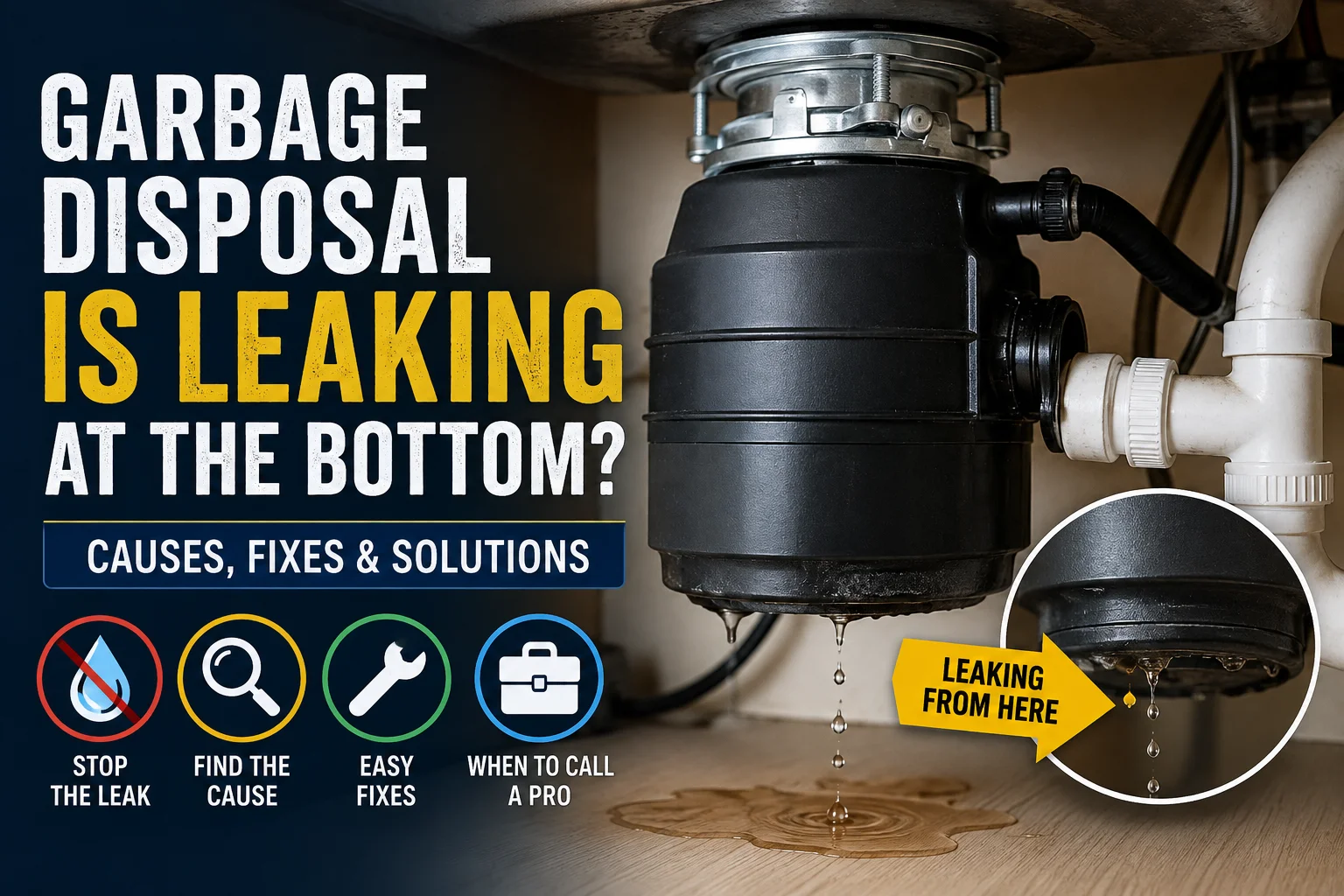
A garbage disposal is the motorized unit mounted under your kitchen sink that grinds up food scraps so they can wash down the drain. When yours is leaking at the bottom, where the water is coming from matters more than most homeowners realize. The exact spot the water appears tells you which part has failed. A leak coming straight from the bottom of the unit often points to a worn internal seal or a cracked housing, and in many of those cases, replacing the disposal is more practical than trying to repair it. This guide walks you through how to find the real source of a leaking garbage disposal and what to do about it.
Why Is My Garbage Disposal Leaking at the Bottom?
A few things commonly cause a garbage disposal to leak from the bottom:
- A failed internal seal. Every disposal has a seal that keeps water away from the motor. Over time, that seal wears out and lets water seep through the bottom of the unit.
- A cracked housing. The metal or plastic shell of the disposal can crack from age, impact, or corrosion, creating a slow but steady drip.
- Damaged internal components. Worn gaskets or deteriorated parts inside the unit can allow water to work its way to the outside.
- Corrosion. Older disposals, especially ones exposed to years of moisture, can corrode from the inside out.
- Age-related wear. Like most appliances, disposals have a working lifespan, and the seals and housing weaken as they get older.
- Improper installation or misuse. A disposal that wasn’t mounted correctly, or one that’s regularly overloaded, can develop leaks sooner than expected.
It’s important to separate a true bottom leak from water that’s simply running down the outside of the unit from a connection above it, like the sink flange or dishwasher hose. Drying the unit off completely and watching where the first drop appears is the best way to tell the difference.
How to Tell Where the Garbage Disposal Is Leaking From
Before you can fix a leaking garbage disposal, you need to know exactly where the water is coming from. Start by wiping the entire unit dry, then run water and watch closely.
Leak from the bottom
If water appears directly from the underside of the unit, especially near the center, this usually points to an internal seal or housing problem rather than a loose connection. This is the type of leak most likely to require replacement.
Leak from the sink flange
The sink flange is the metal ring where the disposal meets the sink drain. If water pools around the top of the disposal near the sink, rather than the bottom, the flange seal has likely failed. This is a different issue than an internal bottom leak and is often repairable.
Leak from the dishwasher connection
If your dishwasher drains into the disposal, check the hose clamp on the side of the unit. A loose or cracked hose connection here can let water drip down the side and pool near the bottom, making it look like a bottom leak when it isn’t.
Leak from the drain pipe
The discharge pipe carries wastewater away from the disposal. If the pipe connection is loose or the gasket has worn out, water can leak from where the pipe meets the unit, which sits low and can be mistaken for a true bottom leak.
Leak from the reset button or lower housing
Water dripping from directly around the reset button, on the very bottom of the unit, usually means the internal seal around the motor shaft has failed. This is an internal issue.
For safety, turn off and unplug the disposal (or shut off its breaker) before inspecting it, and never put your hands inside the unit while checking for leaks.
Common Causes of a Garbage Disposal Leaking at the Bottom
Here’s a closer look at what’s typically behind each cause, and whether it usually calls for a repair or a full replacement.
| Possible Cause | Typical Sign | Repair or Replacement? |
|---|---|---|
| Failed internal seal | Water comes directly from bottom | Often replacement |
| Cracked housing | Visible crack or persistent leak | Usually replacement |
| Sink flange leak | Water starts near sink connection | Often repairable |
| Dishwasher hose leak | Water near hose connection | Often repairable |
| Drain connection leak | Water around drain pipe | Often repairable |
| Corrosion/age | Persistent deterioration | Often replacement |
Keep in mind this table is a general guide, not an exact diagnosis. The only way to know for sure is to inspect your specific unit.
How to Fix a Leaking Garbage Disposal
Some fixes are simple and safe for most homeowners. Others point toward replacing the unit entirely.
Tighten a loose connection
If the leak is coming from the drain pipe or dishwasher hose, try tightening the mounting bolts or hose clamp first. Sometimes a leak is nothing more than a connection that’s worked itself loose over time.
Replace a damaged dishwasher hose connection
If tightening the clamp doesn’t stop the leak, the hose or clamp itself may be worn out. These parts are inexpensive and straightforward to swap out for a new one.
Reseal a leaking sink flange
A flange leak is usually caused by a worn putty seal or gasket between the flange and the sink. This generally involves removing the disposal, cleaning the area, and resealing the flange with fresh plumber’s putty or a new gasket.
Repair a leaking drain connection
If water is coming from where the discharge pipe attaches to the disposal, check that the pipe is properly aligned and the gasket is in good shape. Replacing a worn gasket here is often enough to stop the leak.
Replace the garbage disposal
If the leak is truly coming from the bottom housing of the disposal itself, rather than any of the external connections, replacement is usually the better option. The internal seals and motor housing aren’t designed to be opened or repaired at home, so once they fail, a new unit is typically the most practical fix.
Can You Repair a Garbage Disposal That Is Leaking From the Bottom?
It depends on where exactly the water is coming from. If the leak traces back to an external connection, like the flange, hose, or drain pipe, it can often be repaired without replacing the whole unit. But if the water is genuinely coming from the bottom of the disposal housing itself, the internal seal or housing has likely failed. Since that part of the unit isn’t meant to be serviced, replacing the disposal is usually more practical, and often more cost-effective, than attempting an internal repair.
Garbage Disposal Dripping vs. Major Leak
Not all leaks look the same, and the pattern can help you narrow down the cause:
- Occasional dripping may point to a minor, worsening seal issue or a slightly loose connection.
- Slow, continuous leaking often means a connection or seal has fully failed rather than just loosened.
- Water leaking only when the sink drains suggests the problem is tied to water flow through the unit, such as the drain pipe or flange.
- Water leaking whenever the dishwasher runs points toward the dishwasher hose connection.
- A steady leak even when the disposal isn’t in use often signals standing water finding its way through a failed seal or crack, which is a stronger sign of an internal problem.
What to Do When Your Garbage Disposal Is Leaking
If you notice your garbage disposal is leaking, here’s a simple order of steps to follow:
- Stop using the disposal until you understand the cause.
- Keep electrical components, including the cord and outlet, completely dry.
- Place a container or towel underneath the leak to catch water and protect your cabinet.
- Dry the unit off and identify the approximate leak location.
- Visually check external connections: the flange, dishwasher hose, and drain pipe.
- Avoid reaching into the disposal at any point.
- Decide whether the leak looks like an external connection issue or an internal one.
- Contact a professional if the disposal is damaged internally or you can’t identify the source.
When Should You Replace a Leaking Garbage Disposal?
Replacement is usually the right call when you notice:
- A leak coming from the disposal body or bottom housing itself
- A visible crack in the housing
- Heavy corrosion
- Leaks that keep coming back after repairs
- An older unit nearing the end of its typical service life
- Frequent jams or unusual noises along with the leak
- Repair costs that are close to what a new unit would cost
When to Call a Plumber
Some situations are worth handing off to a professional rather than tackling on your own:
- You can’t determine where the leak is actually coming from
- The disposal housing is cracked
- The leak is severe or getting worse quickly
- Water is reaching electrical components
- The sink flange needs significant repair or resealing
- Plumbing connections are damaged beyond a simple tightening
- You need to replace the disposal but aren’t comfortable installing a new one
- The leak continues even after you’ve repaired an external connection
Other Plumbing Problems Homeowners May Face
A leaking disposal is often just one of several plumbing issues that come up around the house. Homeowners may also deal with slow drain leaks, clogged sinks, dripping faucets, or even Water Heater Repair when an aging unit starts to fail. Staying on top of small plumbing issues early can help you avoid bigger, more expensive repairs later.
Frequently Asked Questions
Why is my garbage disposal leaking from the bottom?
A bottom leak is usually caused by a worn internal seal, a cracked housing, or general age-related wear. Unlike leaks from the flange or hose connections, a true bottom leak means water is escaping from inside the unit itself, which often points toward the need for a replacement rather than a simple repair.
Can a leaking garbage disposal be repaired?
It depends on the source. Leaks from the sink flange, dishwasher hose, or drain pipe connection can usually be repaired by tightening or replacing that specific part. Leaks coming from the disposal’s internal housing are harder to repair and typically call for replacing the unit.
Why does my garbage disposal drip from the bottom only when running?
If the leak only shows up while the disposal is running, water pressure inside the unit during operation may be pushing water past a worn seal. This is a common sign that the internal seal has started to fail.
Is a bottom leak a sign that my garbage disposal needs replacement?
Often, yes. A leak that’s truly coming from the bottom housing, rather than an external connection nearby, usually means the internal seal or housing has failed. Since these parts aren’t meant to be opened or repaired, replacement is typically the most practical solution.
Why is my sink disposal leaking?
A sink disposal can leak for several reasons, including a worn flange seal, a loose dishwasher hose, a failing drain pipe connection, or an internal seal issue. Identifying exactly where the water starts is the key step in figuring out the cause.
Can a garbage disposal leak from the reset button?
Water appearing directly around the reset button on the bottom of the unit usually indicates the seal around the motor shaft has failed. This is an internal issue and is one of the clearer signs that replacement may be needed.
How can I tell if the leak is from the disposal or drain pipe?
Dry the entire area, then run water and watch closely. If water appears right where the drain pipe connects to the disposal, the pipe connection or its gasket is likely the cause. If it comes from elsewhere on the unit’s body, the disposal itself may be the source.
Is it safe to use a leaking garbage disposal?
It’s best to stop using the disposal until you’ve identified the leak’s source, especially if water could reach electrical components. Continuing to use a leaking unit can lead to further damage or create an electrical hazard.
How do I stop my garbage disposal from leaking?
Start by identifying exactly where the leak is coming from. If it’s an external connection, like the flange, hose, or drain pipe, tightening or replacing that part often solves the problem. If the leak is coming from the unit’s internal housing, replacing the disposal is usually the most reliable fix.
Should I repair or replace a leaking garbage disposal?
If the leak is limited to an external connection, repair is usually the more cost-effective choice. If the leak is coming from inside the disposal’s housing, or the unit is older and showing other signs of wear, replacement tends to be the better long-term option.
Conclusion
If water is genuinely coming from the bottom of your garbage disposal’s housing, the issue likely involves an internal seal or damaged housing, and replacing the unit is often more practical than trying to repair it. On the other hand, leaks from the sink flange, dishwasher hose, or drain pipe connection can often be fixed without replacing the entire disposal. Before buying a new unit, take the time to dry the disposal off, run some water, and watch closely to find the actual source. Knowing exactly where the leak starts is the difference between an easy fix and an unnecessary replacement.