
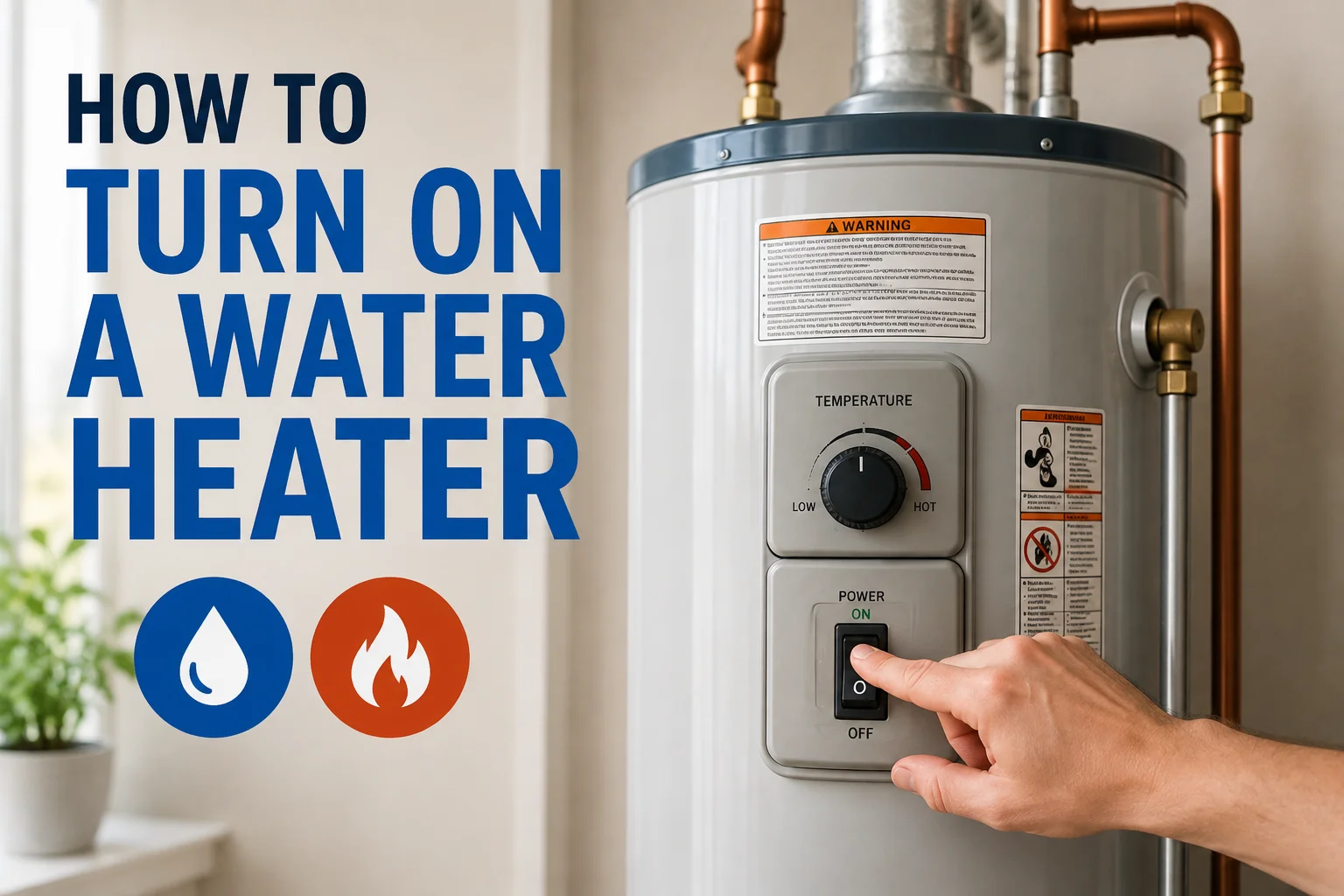
Maybe you just got back from vacation and the water heater has been off the whole time. Maybe a plumber finished a repair and left the unit shut down. Or maybe you flipped a switch or valve without thinking and now there’s no hot water. Whatever the reason, the process for turning a water heater back on depends heavily on whether it’s gas, electric, or tankless, and getting it wrong isn’t just inconvenient — with gas units especially, it can be a safety issue. This guide walks Temecula homeowners through the correct startup steps for each type, along with the warning signs that mean it’s time to call a professional instead of doing it yourself.
Before You Turn On a Water Heater
Before restarting any storage water heater, take a few minutes to check the basics:
- Water supply is on. The cold water valve feeding the tank should be fully open.
- The tank is full. Never energize an electric water heater’s heating elements unless the tank is completely filled with water.
- No visible leaks. Look around the base of the unit, the water connections, and the valves.
- No gas smell. If you smell gas at any point, stop immediately — don’t attempt to light or restart anything.
- Electrical connections look normal. A quick visual check is fine; don’t touch or adjust wiring yourself.
- Installation matches manufacturer requirements. If anything looks altered or unusual, that’s a sign to call a professional first.
This matters because an electric water heater’s heating elements are designed to be submerged in water at all times. If the tank is empty or only partially filled and the elements are energized, they can burn out almost immediately. Always confirm the tank is full before restoring power to an electric unit.
Because startup steps can vary between brands and models, check your water heater’s manufacturer instructions if you have them. They take priority over general guidance whenever the two differ.
How Do You Turn On an Electric Water Heater?
To turn on an electric water heater, first confirm the tank is full of water, then restore power at the circuit breaker, and allow the unit time to heat before testing the water. Here’s the process in more detail.
Step 1: Confirm the Tank Is Full Open a hot water faucet somewhere in the house and let it run until water flows steadily with no sputtering or air. This confirms the tank has filled completely.
Step 2: Check for Leaks Before restoring power, visually inspect the tank connections, water lines, valves, and the area around the bottom of the unit for any signs of moisture or dripping.
Step 3: Restore Electrical Power Electric water heaters run on a dedicated electrical circuit, usually a double-pole breaker in your home’s electrical panel. Simply switch the breaker back to the “on” position. If the breaker won’t stay on, or if it trips repeatedly, don’t keep resetting it — that’s a sign of an underlying electrical issue that needs professional diagnosis.
Step 4: Allow the Water to Heat Once power is restored, the heating elements will begin warming the stored water. This can take anywhere from under an hour to a few hours depending on the tank size and element wattage, especially if the tank started out completely cold.
Step 5: Test Hot Water After giving the unit time to heat, run a hot water tap and check that the temperature rises normally and stays consistent.
How Do You Turn On a Gas Water Heater?
Gas water heater startup varies depending on the ignition system. Some older units use a standing pilot light that burns continuously, while many newer models use electronic ignition that lights automatically when hot water is needed. Always check your specific model’s instructions, since the process isn’t identical across all gas water heaters.
How to Turn On a Gas Water Heater With a Pilot Light
If your unit has a standing pilot, the general process looks like this:
- Confirm there’s no gas smell before doing anything else.
- Make sure the tank is filled with water.
- Locate the gas control valve and set it according to the label instructions on the unit — this typically involves a “pilot” setting before ignition.
- Follow the designated ignition procedure printed on the water heater, which usually involves holding the control knob while lighting the pilot.
- Confirm the pilot stays lit after you release the control knob.
- Once lit, set the control to “on” and allow the main burner to operate normally.
- Check that the tank is heating over the following hour or so.
If the pilot won’t stay lit after a reasonable attempt, don’t keep trying repeatedly. A pilot that won’t hold usually points to a thermocouple issue, a gas supply problem, or another component that needs professional attention.
How to Turn On a Gas Water Heater With Electronic Ignition
Many newer gas water heaters use electronic ignition instead of a standing pilot. These systems typically require:
- An open gas supply valve
- Power to the control module, if the model requires it
- Following the specific ignition sequence shown on the unit’s control panel or in the manual
Electronic ignition systems often display status lights or error codes if something isn’t right. Since these vary by manufacturer, always follow the model-specific instructions rather than assuming all electronic-ignition units start the same way.
How to Turn On a Tankless Water Heater
Tankless water heaters don’t store a large volume of water, so their startup process looks a little different. To turn one on, you’ll generally need to confirm:
- The water supply valve is open
- Gas or electrical power (depending on the unit) is connected and active
- The control panel or display shows a normal ready state, without error codes
Once these are confirmed, most tankless units activate automatically when you open a hot water tap — there’s no large tank that needs to heat up first. If the unit doesn’t fire up when hot water is requested, possible causes include a power interruption, a gas supply issue, insufficient water flow through the unit, or an active error code. Don’t attempt to open or disassemble the unit yourself; refer to the display’s error code and the manufacturer’s troubleshooting guide, or contact a professional.
How to Turn On a Water Heater After Vacation
Restarting a water heater after time away depends on how it was shut down before you left. In general:
- Restore the water supply if it was shut off.
- Check for leaks before restoring power or gas.
- For electric units, confirm the tank is full, then restore power at the breaker.
- For gas units, follow the appropriate pilot or electronic ignition procedure for your model.
- Listen for unusual sounds and watch for error codes as the unit starts up.
- Give the system time to fully heat before assuming something is wrong.
Not every vacation shutdown is the same — some homeowners only turn off the water, others also cut power or gas — so match your restart process to what was actually turned off.
How to Turn On a Water Heater After It Has Been Off
Before restarting, it helps to know why the unit was turned off in the first place. If it was shut down intentionally for maintenance, a repair, or a vacation, restarting is usually straightforward using the steps above. If it stopped unexpectedly on its own, that’s different — an unplanned shutdown often points to a tripped safety control, an electrical fault, or a gas-related issue. In that case, restarting the unit without understanding why it shut off in the first place may just lead to it shutting off again, or worse.
How Long Does It Take for a Water Heater to Heat Up After Turning It On?
Heating time after startup depends on the water heater type, tank size, heating capacity, starting water temperature, and how much hot water your household is using. A full tank starting completely cold generally takes longer to heat than a partial recovery cycle. Tankless water heaters work differently, since they heat water on demand rather than storing and heating a full tank. If you want a deeper breakdown of expected heating and recovery times by system type, our related guide on water heater heating time covers this in more detail.
What If the Water Heater Does Not Turn On?
If your water heater won’t start, the cause depends on the type of unit:
Electric Water Heater
- Tripped circuit breaker
- Failed heating element
- Thermostat malfunction
- Electrical fault in the circuit
Gas Water Heater
- Gas supply interruption
- Pilot light that won’t stay lit
- Ignition failure
- Thermocouple or gas control issue
- A venting or safety shutoff that has been triggered
Tankless Water Heater
- Power interruption
- Gas supply issue
- Low water flow triggering the unit not to activate
- An active error code
- A system fault requiring diagnosis
These are general possibilities, not a diagnosis — pinpointing the actual cause usually requires hands-on inspection.
Why You Should Not Keep Resetting a Water Heater
If flipping a breaker or relighting a pilot gets the unit running again but it keeps failing, resist the urge to keep resetting it. Repeated resets can temporarily mask an underlying problem such as an electrical fault, a failing component, overheating, or a gas ignition issue, while the actual cause goes unaddressed. If a breaker or safety control keeps tripping, that’s your water heater telling you something is wrong — it’s worth having a professional take a look rather than continuing to reset it.
When Should You NOT Turn On a Water Heater?
Stop and do not attempt to turn on or restart your water heater if you notice any of the following:
- A gas smell, however faint
- A significant water leak
- A damaged or corroded gas line
- Damaged or exposed electrical wiring
- A burning electrical smell
- Severe corrosion on the tank or connections
- Damaged venting
- Signs of a combustion problem, such as soot or unusual odors
- Any modification to the unit that looks unsafe or non-standard
These situations call for a qualified professional rather than DIY troubleshooting. Attempting to force a restart under these conditions can create a genuinely dangerous situation.
Water Heater Startup in Temecula
The startup basics stay the same no matter where you live: identify whether your unit is gas, electric, or tankless, confirm the water supply is open, check for leaks and other warning signs, and follow the manufacturer’s specific instructions for ignition or power restoration. Temecula homeowners dealing with an older unit, a recent move-in, or a water heater that’s never quite worked right after a reset may find it worthwhile to have a local water heater service take a look, especially if the unit won’t restart normally or keeps shutting off.
Gas vs. Electric Water Heater Startup
| Feature | Electric Water Heater | Gas Water Heater |
|---|---|---|
| Energy source | Electricity | Natural gas or propane, depending on model |
| Main startup consideration | Electrical power | Gas supply and ignition system |
| Tank must be full before heating | Yes | Yes |
| Pilot light | No | Some models |
| Electronic ignition | Some models use electronic controls | Common on many newer models |
| Model-specific instructions | Yes | Yes |
FAQs
How do you turn on a water heater?
The process depends on the type: electric units need a full tank and restored circuit power, gas units need the correct pilot or electronic ignition sequence, and tankless units need active water, power/gas, and no error codes.
How do you turn on an electric water heater?
Confirm the tank is completely full of water, then restore power at the circuit breaker. Give the unit time to heat before testing hot water at a faucet.
How do you turn on a gas water heater?
Confirm there’s no gas smell and the tank is full, then follow your model’s specific ignition steps — either lighting a standing pilot or triggering electronic ignition per the manufacturer’s instructions.
How do you turn on a hot water heater?
“Hot water heater” and “water heater” refer to the same appliance. The startup steps are the same as for any gas, electric, or tankless unit described above.
How do you switch on a water heater?
Switching on a water heater means restoring its power (electric), gas and ignition (gas), or supply and control power (tankless) after confirming water supply and checking for leaks first.
How do I turn on a water heater after vacation?
Restore the water supply, check for leaks, then restore power or follow your ignition procedure depending on unit type. Watch for unusual sounds or error codes as it starts back up.
How do I turn on a water heater after it has been off?
First figure out why it was off. If it was an intentional shutdown, restarting is usually simple. If it turned off unexpectedly, the underlying cause should be checked before or after restarting.
Does a water heater need to be full before turning it on?
Yes, especially for electric units. Energizing heating elements in an empty or partially filled tank can damage them almost immediately.
How long does a water heater take to heat up after being turned on? It varies by type and size, generally ranging from under an hour to a few hours for storage tanks starting cold. Tankless units heat water on demand rather than storing a full tank.
What should I do if my water heater will not turn on?
Check the obvious things first — power, gas supply, and water supply — then consult your model’s manual. If it still won’t start, professional diagnosis is the next step.
Why won’t my gas water heater pilot stay lit?
This is commonly caused by a faulty thermocouple, a gas supply issue, or a dirty pilot assembly. Repeated relighting attempts aren’t a fix — professional service is usually needed.
Is it safe to turn on a water heater if it is leaking?
No. A leaking water heater, especially a gas unit, should not be turned on until a professional has inspected it and addressed the leak.
When should I call a water heater professional? Call a professional if you smell gas, see a leak, notice damaged wiring or venting, the unit won’t start after following manufacturer steps, or a breaker or safety control keeps tripping.
Conclusion
Turning on a water heater isn’t a one-size-fits-all process — electric, gas, and tankless units each have their own startup requirements. Electric water heaters need a full tank before power is restored, gas water heaters require careful attention to the ignition system and gas supply, and tankless units rely on active power, gas, and water flow rather than a stored tank. Always follow your specific manufacturer’s instructions, and never attempt to force a restart if you notice a gas smell, a leak, damaged wiring, or any other warning sign.
If your water heater in Temecula will not restart, keeps shutting down, or shows signs of a gas, electrical, or water-related problem, professional water heater service can help identify the cause safely.